 Shikha
Choosing the right financing option is an important financial decision for individuals and business owners. Whether you need funds to expand your business, manage personal expenses, purchase equipment, or meet a significant financial requirement, understanding the differences between available loan products can help you make a better-informed choice.
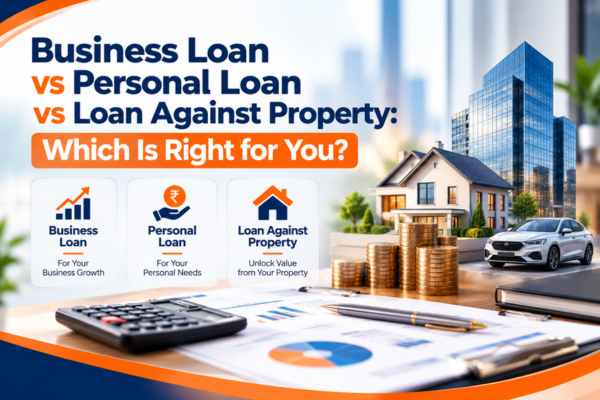
Three commonly considered options are a business loan, a personal loan, and a loan against property (LAP). Although all three provide access to funds, they differ in their intended purpose, eligibility criteria, security requirements, and repayment terms.
At Traksha Consultancy Services, we help applicants understand their financing needs and explore relevant loan options. In this guide, we compare these three products and explain what to consider before choosing one.
1. What Is a Business Loan?
A business loan is designed to help eligible businesses meet funding requirements related to their operations or growth.
Business owners may consider this type of financing for purposes such as:
- Expanding business operations
- Purchasing inventory or raw materials
- Buying machinery or equipment
- Managing working capital requirements
- Opening a new branch
- Supporting business-related expenses
Who Should Consider a Business Loan?
A business loan may be worth exploring if you operate an established business and need funds for a clearly defined business purpose.
Depending on the lender, eligible applicants may include proprietors, partnership firms, LLPs, and companies.
What Do Lenders Evaluate?
Lenders may assess business vintage, turnover, profitability, banking history, credit profile, existing liabilities, and repayment capacity.
Some business loans are unsecured, while others may require collateral or additional conditions. The applicable requirements depend on the lender and loan product.
2. What Is a Personal Loan?
A personal loan is generally an unsecured loan offered to eligible individuals for permitted personal financial needs.
Depending on the lender’s terms, it may be used for expenses such as:
- Medical expenses
- Education-related costs
- Wedding expenses
- Travel expenses
- Home repairs
- Other eligible personal requirements
Who Should Consider a Personal Loan?
A personal loan may be suitable for an individual who needs funds for a personal expense and meets the lender’s income, credit, and other eligibility requirements.
Salaried employees and eligible self-employed individuals may be able to apply, subject to the lender’s policies.
What Do Lenders Evaluate?
Lenders may review income, employment or business stability, credit history, existing EMIs, bank statements, and repayment capacity.
Because personal loans are generally unsecured, the interest rate and eligible amount can be influenced by the applicant’s financial profile and the lender’s assessment.
3. What Is a Loan Against Property?
A Loan Against Property, commonly known as LAP, allows an eligible property owner to borrow against an accepted property as security.
Depending on the lender’s policy, the property may be residential or commercial.
Applicants may consider LAP for eligible requirements such as:
- Business expansion
- Business debt consolidation
- Large business expenditure
- Education expenses
- Other permitted financial needs
Who Should Consider a Loan Against Property?
LAP may be worth exploring if you own an eligible property, require a comparatively substantial amount of funding, and can manage the associated repayment obligations.
The lender may evaluate the property’s ownership, legal status, market valuation, the applicant’s income, credit history, and repayment capacity.
Important Consideration
A Loan Against Property is secured financing. If the borrower fails to meet the loan obligations, the lender may take action against the secured property in accordance with the loan agreement and applicable law.
Therefore, applicants should carefully evaluate the risks before using property as collateral.
4. Business Loan vs Personal Loan vs Loan Against Property
| Feature | Business Loan | Personal Loan | Loan Against Property |
| Primary purpose | Business funding | Personal expenses | Eligible funding needs secured against property |
| Applicant | Eligible business or business owner | Eligible individual | Eligible property owner or other permitted applicant |
| Collateral | May or may not be required | Generally unsecured | Property is used as security |
| Eligibility assessment | Business and financial profile | Income and personal credit profile | Property and financial profile |
| Loan amount | Depends on business eligibility | Depends on personal eligibility | Depends on property valuation and repayment capacity |
| Main consideration | Business cash flow | Personal repayment capacity | Repayment capacity and collateral risk |
The table provides a general comparison. Actual terms, eligibility, and available amounts vary by lender and product.
5. Which Loan Should You Choose?
The right loan depends on why you need the money, how much you need, and how you intend to repay it.
Choose a Business Loan When:
- The funds are required for business purposes.
- You can demonstrate business income and financial activity.
- The proposed repayments are manageable from business cash flow.
- You want to explore financing designed for business requirements.
Consider a Personal Loan When:
- The expense is personal rather than business-related.
- You meet the lender’s income and credit requirements.
- You prefer to explore an unsecured financing option.
- The repayment schedule fits your monthly budget.
Consider a Loan Against Property When:
- You own a property that meets the lender’s requirements.
- You need funds for an eligible purpose.
- You understand the valuation and documentation process.
- You are comfortable with the risk of pledging property as security.
Do not choose a loan solely because it offers a higher eligible amount. Consider the total borrowing cost, repayment obligations, and risks associated with the product.
6. Compare Interest Rates, Fees, and Repayment Terms
Before accepting any loan offer, review more than the advertised interest rate.
Consider the following:
Interest rate: Check whether the rate is fixed or floating, where applicable, and understand how it may affect repayments.
Processing fees: Ask about processing fees and any other applicable charges.
Loan tenure: A longer tenure may reduce the periodic EMI but can increase the total interest paid.
Prepayment and foreclosure terms: Understand whether charges or conditions apply if you repay the loan early.
EMI affordability: Estimate the repayment amount and ensure it fits your income or business cash flow.
Security requirements: For secured loans, understand the collateral obligations and the consequences of default.
For covered retail and MSME term loans, lenders regulated by the Reserve Bank of India are subject to applicable Key Facts Statement requirements, which help borrowers understand important loan terms and costs.
FIDC
+1
7. Documents You May Need
Documentation depends on the loan category, lender, and applicant profile.
Commonly requested documents may include:
- PAN card and identity proof
- Address proof
- Bank statements
- Income proof or income tax returns
- Business registration documents, where applicable
- Financial statements, where applicable
- Property ownership and related documents for LAP
The lender may request additional information during verification.
Frequently Asked Questions
Q1. Which loan is better for business expansion?
A business loan may be suitable for business expansion, while LAP may also be considered by eligible property owners. The appropriate option depends on the funding requirement, eligibility, total cost, and collateral preferences.
Q2. Is a personal loan always more expensive than a business loan?
No. Interest rates depend on the applicant’s profile, lender, product, loan amount, tenure, and other factors. Compare actual offers rather than assuming one product is always cheaper.
Q3. Can I get a Loan Against Property without income proof?
Lenders generally assess repayment capacity and may require financial documents. Requirements vary, so confirm the documentation criteria with the relevant lender.
Q4. Which loan requires collateral?
A Loan Against Property requires an eligible property as security. Business loans may be secured or unsecured, while personal loans are generally unsecured.
Q5. Can Traksha Consultancy Services help me compare loan options?
Traksha can help you understand your requirements, explore relevant financing options, and coordinate the application process. Final eligibility, terms, and approval are determined by the lender.
Conclusion
A business loan, personal loan, and Loan Against Property serve different financial needs. A business loan is designed for eligible business requirements, a personal loan may help with permitted individual expenses, and LAP allows eligible property owners to borrow against property.
Before making a decision, compare the interest rate, fees, tenure, repayment capacity, documentation, and any collateral risks. A well-informed decision can help you select financing that fits your financial situation.
Need help exploring your financing options? Contact Traksha Consultancy Services to discuss your requirements and receive assistance with the application process.
Disclaimer: This article is for general informational purposes and is not financial or legal advice. Loan approval, interest rates, fees, tenure, and eligibility depend on the lender’s policies and individual assessment. Traksha Consultancy Services does not guarantee loan approval.