
 Shikha
A business loan can help entrepreneurs expand operations, purchase equipment, manage cash flow, increase inventory, or explore new growth opportunities. However, getting a business loan approved depends on several factors, including the financial health of the business, the applicant’s credit profile, repayment capacity, and the lender’s eligibility criteria.
Understanding these requirements before applying can help business owners prepare their applications more effectively and identify potential issues in advance.
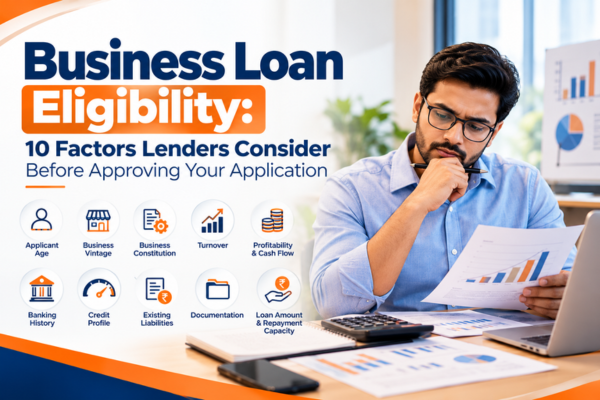
At Traksha Consultancy Services, we help applicants understand their financing requirements, explore suitable loan options, and navigate the application process. In this guide, we explain ten important factors lenders may consider when evaluating a business loan application.
1. Applicant’s Age
Lenders generally have age eligibility requirements for business loan applicants. These requirements may differ depending on whether the applicant is a proprietor, partner, or company director, as well as the lender’s policies.
Before applying, check the minimum and maximum age requirements applicable to your chosen loan product.
2. Business Vintage
Business vintage refers to the length of time a business has been operating. Some lenders prefer businesses with an established operating history because it provides information about their stability and financial performance.
New businesses may have fewer financing options, while established businesses may be assessed using their operating history, financial statements, and banking records.
The minimum business vintage requirement varies by lender and loan product.
3. Business Constitution
The legal structure of a business can influence its loan eligibility and documentation requirements.
Common business structures include:
- Sole proprietorship
- Partnership firm
- Limited Liability Partnership (LLP)
- Private limited company
- Public limited company
Lenders may require different identity, ownership, registration, and financial documents depending on the constitution of the business.
4. Annual Turnover
Turnover represents the total revenue generated by a business during a particular period, generally before deducting expenses.
Lenders may review turnover to understand the scale of business operations and assess whether the requested loan amount is reasonable in relation to the business’s revenue.
However, higher turnover alone does not guarantee approval. Lenders may also evaluate profitability, existing liabilities, banking transactions, and repayment capacity.
5. Profitability and Cash Flow
A business may generate substantial revenue but still experience financial difficulties if its expenses are high or payments from customers are delayed.
Lenders may examine profitability and cash flow to determine whether the business can comfortably manage its loan repayments.
Factors that may be reviewed include:
- Profit and loss statements
- Regular operating expenses
- Customer payment cycles
- Supplier payments
- Seasonal fluctuations
- Existing debt repayments
Maintaining accurate financial records can help present a clearer picture of your business’s financial position.
6. Banking History
Bank statements help lenders understand how money moves through a business.
Depending on the loan product, lenders may examine average account balances, transaction consistency, cheque returns, cash deposits, and existing loan deductions.
Keeping business transactions properly recorded and avoiding unnecessary banking irregularities can help improve the quality of your application.
7. Credit Profile
Your credit profile provides information about your borrowing and repayment history. Lenders may review the credit history of the business and, where relevant, the proprietor, partners, or directors.
Factors that may affect the assessment include:
- Credit score and repayment history
- Outstanding loan balances
- Missed or delayed payments
- Credit card utilisation
- Previous loan defaults or settlements
Review your credit report before applying. If you identify incorrect information, consider raising a dispute with the relevant credit bureau.
A strong credit profile can support an application, but approval also depends on other eligibility criteria.
8. Existing Financial Liabilities
Existing loans and other financial commitments can affect how much additional borrowing a business can reasonably manage.
Lenders may consider current EMIs, outstanding business loans, credit facilities, and other repayment obligations when assessing the proposed loan.
Before applying, calculate your existing monthly obligations and estimate the additional repayment you can manage without placing unnecessary pressure on business operations.
9. Documentation
Incomplete or inconsistent documentation can delay the loan application process.
Depending on the applicant’s profile and the lender’s requirements, documents may include:
- PAN card and identity proof
- Address proof
- Business registration documents, where applicable
- Bank statements
- Income tax returns
- Financial statements
- GST returns, where applicable
- Existing loan statements, if requested
The exact list depends on the loan category, business structure, and lender’s assessment process.
10. Loan Amount and Repayment Capacity
The requested loan amount should be aligned with the business’s actual funding requirement and financial capacity.
For example, a business seeking funds for inventory purchases should estimate its inventory requirements, expected sales, operating costs, and repayment schedule before deciding how much to borrow.
Lenders may evaluate the purpose of the loan, the amount requested, the proposed tenure, and the applicant’s ability to meet repayments.
Borrowing responsibly can help businesses avoid excessive financial pressure.
How Can You Prepare for a Business Loan Application?
Before submitting your application, consider these practical steps:
- Define the purpose and amount of funding required.
- Review your credit report and existing financial obligations.
- Organise business and financial documents.
- Check the eligibility requirements of potential lenders.
- Estimate the EMI and assess your repayment capacity.
- Compare applicable interest rates, processing fees, and loan terms.
- Submit accurate and consistent information with your application.
These steps can help you approach the process with greater clarity, although they cannot guarantee loan approval.
Frequently Asked Questions
Q1. What is the minimum turnover required for a business loan?
There is no single turnover requirement for every business loan. It varies by lender, loan product, applicant profile, and requested loan amount.
Q2. Can I get a business loan if my business is new?
Some financing products may be available to newer businesses, but eligibility requirements vary. Lenders may consider the business plan, applicant’s financial profile, available security, and other factors.
Q3. Does a low credit score mean my application will be rejected?
Not necessarily. A lower credit score may affect eligibility or the terms offered, but each lender follows its own assessment criteria.
Q4. How much business loan can I get?
The eligible amount depends on factors such as turnover, cash flow, credit history, existing liabilities, business vintage, and the lender’s policies.
Q5. Can Traksha Consultancy Services help with my application?
Traksha can help you understand your financing requirements, explore relevant loan options, and coordinate the application process. The final decision rests with the lender.
Conclusion
Business loan eligibility depends on more than just turnover or credit score. Your business history, financial performance, banking records, existing liabilities, documentation, and repayment capacity may all influence the lender’s decision.
Preparing these details in advance can help you make a more informed financing decision.
Looking for business loan assistance? Contact Traksha Consultancy Services to discuss your requirements and explore available financing options.
Disclaimer: Loan eligibility, interest rates, fees, tenure, and approval are subject to the respective lender’s policies and assessment. Traksha Consultancy Services does not guarantee loan approval.